
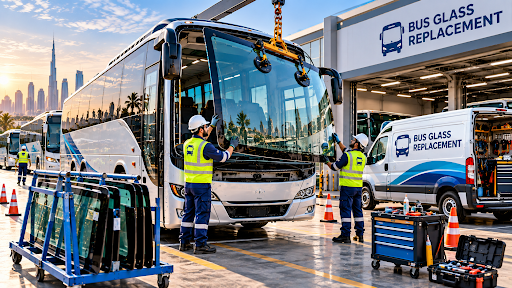
Running a school bus route or a public transport line in Qatar means managing dozens of moving costs, and glass damage is one that catches many fleet operators off guard. Bus Glass Replacement is not a small line item like a car windshield job — the panels are larger, the labor takes longer, and a bus sitting idle affects an entire route, not just one driver. Understanding what actually drives the cost, how to budget for it across a fleet, and what Qatar’s transport compliance checks expect makes bus glass replacement far easier to plan for. Mr.Glass works with school bus operators, public transport contractors, and private coach companies across Qatar to keep this cost predictable rather than a surprise.
The price of bus glass replacement depends on more than just the size of the panel. Front windshields on buses are considerably larger than car windshields and often require two technicians and specialized lifting equipment, which adds to labor time. Side glass panels vary in cost depending on whether they are fixed or sliding, and rear glass on coach-style vehicles can carry additional cost if it includes tinting or defrost elements. The age and model of the bus also matters, since older fleet vehicles sometimes need glass sourced through longer supply chains than newer models with readily available stock. Mr.Glass provides itemized quotes for bus glass replacement so fleet managers can see exactly where the cost comes from.
Operators managing ten, twenty, or more buses save real money by budgeting for bus glass replacement proactively rather than treating each incident as an unplanned expense. Tracking how often each vehicle in the fleet needs glass work over a year gives a realistic average cost per bus that can be built into annual maintenance budgets. Consolidating multiple vehicles into a single scheduled service visit, rather than booking each bus separately as damage occurs, also reduces the per-job cost through fewer callout fees and better technician scheduling. Mr.Glass offers fleet pricing and consolidated invoicing specifically to help operators manage bus glass replacement as a predictable annual cost rather than a series of unexpected bills.
Buses covering school runs and public routes in Qatar accumulate more daily distance and more stops than most passenger vehicles, which increases exposure to stone chips from surrounding traffic. Frequent door and window operation on public buses puts additional stress on side glass seals over time, while long hours parked in direct sun between routes accelerates the kind of thermal stress that turns a small chip into a spreading crack. These factors combine to make bus glass replacement a more regular line item for transport operators than for typical private vehicle owners, which is exactly why building it into a maintenance schedule pays off.
Qatar’s public and school transport vehicles face closer scrutiny than private cars during roadworthiness inspections, and windscreen condition is one of the first things an inspector check. A cracked or heavily pitted windshield can fail a vehicle at inspection, pulling it off the road until bus glass replacement is completed and pushing a scheduled route into disruption. Operators who complete bus glass replacement proactively, before a routine inspection flags the damage, avoid this kind of unplanned downtime. Mr.Glass provides the documentation fleet managers need to show that glass work was completed to the required standard, which speeds up compliance reporting.
A bus off the road is a bus not generating revenue or covering its route, so minimizing downtime during bus glass replacement matters as much as the cost of the glass itself. Mobile service at the depot removes the need to drive a damaged bus to a workshop, and scheduling replacement during off-peak hours between routes keeps the vehicle available when it is needed most. Mr.Glass coordinates bus glass replacement around an operator’s actual schedule, rather than asking fleet managers to work around a fixed workshop appointment slot.
Not every glass shop is set up to handle the scale of bus glass replacement work, since it requires larger inventory, bigger lifting equipment, and technicians experienced with commercial vehicle glass mounting systems. A provider who can service multiple buses in one visit, offer consolidated billing across a fleet, and turn around parts quickly for less common bus models saves operators time on every job, not just the first one. Mr.Glass has built exactly this kind of capability for Qatar’s transport operators, from single-route school contractors to larger public transport fleets.
Bus Glass Replacement is a cost every transport operator in Qatar eventually faces, and treating it as a planned, budgeted part of fleet maintenance rather than an emergency expense protects both the schedule and the bottom line. Mr.Glass provides fleet-scale bus glass replacement with transparent pricing, mobile depot service, and the compliance documentation operators need. Contact Mr.Glass today to set up a fleet glass maintenance plan for your buses.
Posted on: October 07, 2026