
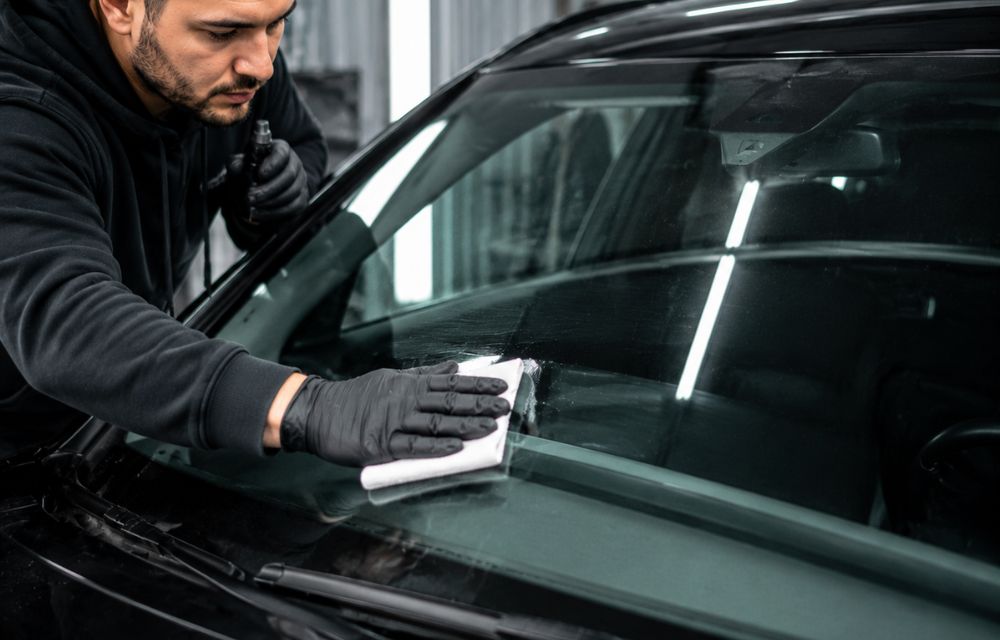
Clean vehicle glass is essential for safe driving — dirty or streaky windshields and windows reduce visibility significantly, particularly in challenging conditions like bright sunlight, nighttime driving, and rain. Yet despite the importance of keeping glass clean, many drivers regularly make mistakes during the cleaning process that leave glass streaky, create scratches on the surface, damage protective coatings, and even compromise the long-term integrity of the glass. Understanding how to clean car glass correctly — and what not to do — is an important part of Auto Glass Detailing that many drivers have never been properly taught. This blog explains the most common glass cleaning mistakes and how to avoid them.
One of the most damaging mistakes is using household cleaning products on car glass. Standard household glass cleaners often contain ammonia, which is harmful to vehicle window tinting films and to the rubber window seals and trim surrounding the glass. Ammonia causes tinting films to deteriorate, discolour, and eventually peel. It also degrades rubber seals over time, contributing to water leaks and wind noise.
For vehicle glass, always use products specifically formulated for automotive glass. These products clean effectively without containing ammonia or other compounds that are harmful to the surrounding materials. If your vehicle has tinted windows, ensure the product is specifically listed as safe for tinted glass.
Cleaning your car glass in direct sunlight or when the glass surface is hot causes cleaning products to dry almost immediately on contact, before they can be properly worked into the surface and wiped away. This rapid drying is one of the primary causes of streaky glass after cleaning — the cleaner and the dirt it has lifted are left dried onto the surface rather than being fully removed.
Always clean car glass in shade or during the cooler parts of the day. Allow the vehicle to cool if it has been parked in sun before beginning the cleaning process.
The material used to clean and dry vehicle glass makes an enormous difference to the result. Paper towels leave tiny fibres on the glass surface and can scratch soft glass coatings. Old cotton rags may be too abrasive or may harbour grit particles from previous use that scratch the glass. Newspaper, once a popular glass cleaning tool, is no longer recommended for modern vehicles with tinted glass and coatings.
The correct tool for Auto Glass Detailing is a clean, lint-free microfibre cloth — ideally one used exclusively for glass to avoid cross-contamination with cleaning products used on other vehicle surfaces. Using two cloths — one for applying and working in the cleaner, and a second clean dry one for the final buffing — gives the best streak-free result.
Many drivers focus exclusively on the exterior glass when cleaning, overlooking the interior surfaces that also accumulate significant grime. The interior of car windows collects a film of outgassing from plastic and rubber interior components, dust, and condensation residue that builds up into a hazy coating that reduces clarity, particularly when driving toward bright light.
Interior glass requires as much attention as exterior surfaces during any thorough glass cleaning. Use an appropriate interior glass cleaner and work carefully around the dashboard and trim to reach all areas of the windshield interior without touching surrounding surfaces with the cleaner.
Dirty or worn wiper blades are a significant contributor to streaky windshields. A wiper blade that has accumulated road grime along its rubber edge smears that grime back across the glass every time it wipes. Even if the windshield is cleaned thoroughly, a dirty or deteriorated wiper will immediately return it to a streaky state. Always clean or replace wiper blades as part of any thorough glass cleaning process.
Also Read - Understanding Laminated vs Tempered Auto Glass
Cleaning glass using circular motions rather than straight overlapping strokes is a common habit that frequently leads to visible circular swirl marks and uneven cleaning results. Using straight, overlapping strokes — horizontal on one pass and vertical on the next — ensures complete and even coverage and makes it easier to identify any areas that have been missed.
Proper Auto Glass Detailing is a straightforward process when the right products, tools, and techniques are used consistently. By avoiding common mistakes — using appropriate cleaning products, cleaning in shade, using quality microfibre cloths, addressing interior surfaces, maintaining clean wiper blades, and using correct wiping technique — drivers in Qatar can keep their vehicle glass in optimum condition for both safety and appearance. For deep glass cleaning, restoration, or specialist treatments including hydrophobic coating application, working with a professional auto glass specialist ensures the best possible result.
Posted on: June 28, 2026